Best Tools for Building a Fence in 2026: What I Actually Use
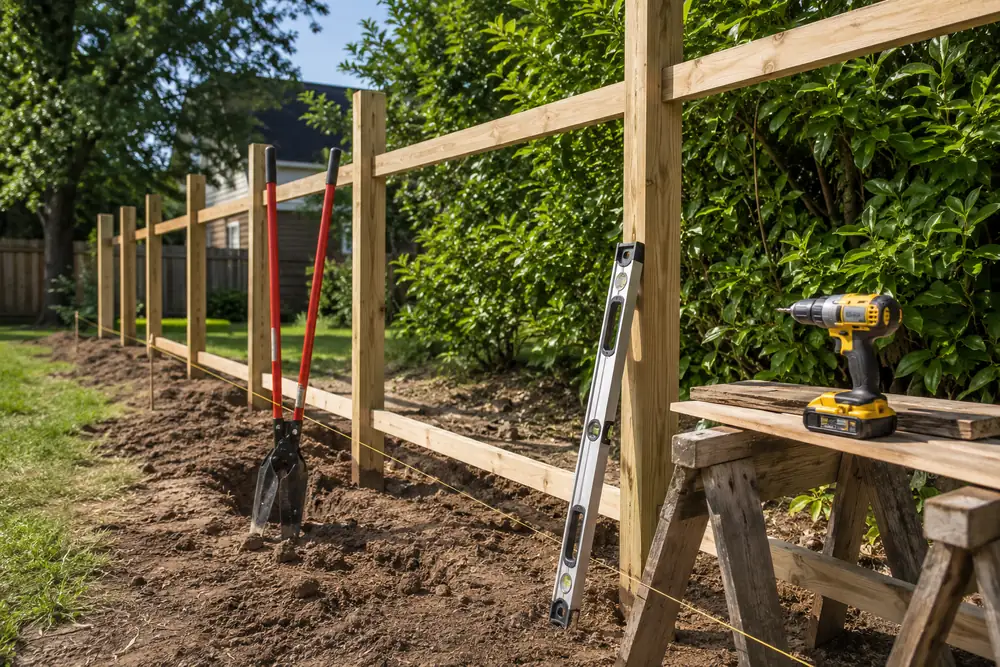
Fence building tools: the short list you actually need is a way to dig holes (post hole digger or powered auger), a post level, a string line, a tamper, something to mix and pour concrete, an impact driver, a saw, and fence pliers if you're running chain-link. Everything else is nice to have. Get the digging and leveling tools right and the rest follows.
I've built fence for fifteen years, and I've bought, broken, and returned a lot of tools to land on this list. This isn't a catalog of everything that exists. It's the gear that's actually in my truck and earns its spot on every job, plus honest notes on what's worth buying versus renting. If you're building your first fence, my how to build a fence guide walks the whole process, and this is the tool list to go with it.
Digging: Post Hole Digger vs Powered Auger
This is the single biggest tool decision, because digging is the hardest labor in fence building.
A clamshell post hole digger is the cheap, reliable hand tool. For a handful of holes, a short fence, or working around marked utility lines where you must hand-dig, it's exactly right. It's also the tool you use to clean out the bottom of a hole the auger couldn't quite finish. Every fence builder should own one. Get fiberglass handles, not wood, because wood handles split right when you're leaning on them hardest.
A powered earth auger is the back-saver. If you're digging more than about a dozen holes, a powered auger turns a brutal day into a manageable one. One-man augers work for most residential jobs; two-man and towable units are for big runs or hard soil. The honest catch: in rocky or root-choked ground an auger will spin, bind, or kick, and you'll still finish by hand with a digging bar. But on normal soil it's transformative.
My buy-vs-rent take: if you're a homeowner doing one fence, rent the auger. They're available at any tool rental yard for a day rate that's a fraction of buying, and you don't have to store or maintain a gas engine you'll use once. Buy the clamshell digger though, because it's cheap and you'll use it forever.
Leveling And Layout
A post level is the cheapest tool that makes the biggest difference to a finished fence. It reads two planes at once and straps or magnets to the post so you've got both hands free to brace and pour. Trying to plumb a post with a regular spirit level is a two-hands, one-plane-at-a-time headache. A dedicated post level is a few dollars and it's the reason your fence looks straight.
A mason's string line and line level is your truth for the whole layout. You stretch it between your end posts and everything references off it: post locations, post height, picket alignment. A fence that wanders off-line looks wrong forever, and the string is what keeps it honest. Pennies of equipment, enormous payoff.
Tamping And Concrete
A post tamper or tamping bar does double duty: the chisel end breaks up rock and roots while digging, and the flat end tamps gravel and backfill firm. If you're setting any posts in gravel rather than concrete, a tamper is essential for getting that base packed tight so the post doesn't settle.
For concrete, you've got two paths. Fast-setting mix poured dry into the hole and then watered is the quickest method for fence posts and what a lot of pros use. If you'd rather mix first, a mixing tub and mortar hoe handles a bag or two at a time without a powered mixer. For a long fence with a lot of posts, renting a small powered mixer is worth it, but for most residential jobs a tub and hoe, or pour-and-water, gets it done.
Driving Fasteners
An impact driver is non-negotiable for a wood fence. You're driving a lot of exterior structural screws into rails and pickets, and a drill will burn out and wear out your wrist. An impact driver sinks long structural screws without pre-drilling and without stripping heads. Get a cordless kit with two batteries so you're never dead in the middle of a run. This is a buy, not a rent, because you'll use it on every project around the house for years.
For pickets specifically, a cordless framing or finish nailer turns picket day from a weekend of hand-nailing into a few hours. If you're only ever building one fence, hand-nailing with exterior ring-shank nails is fine and free. If you'll build or repair fence more than once, the nailer pays for itself in saved time and saved shoulders.
Cutting
A circular saw handles rail cuts, picket trimming, and topping posts to height. Cordless is convenient out in the yard where you're nowhere near an outlet. For cutting a lot of pickets to a consistent height, a miter saw on a stand is faster and more accurate, but a good circular saw with a speed square does everything a basic fence needs.
Chain-Link: Fence Pliers
If you're building chain-link instead of wood, the one specialty tool you cannot skip is a pair of fence pliers. They cut, splice, and twist the tie wires and tension the fabric, doing the work of several tools in one. Trying to build chain-link without proper fence pliers is miserable. You'll also want a come-along or fence stretcher to pull the fabric tight, which is a rent-or-borrow item for a one-time job.
Safety Gear You'll Regret Skipping
I left this for here on purpose, because it's the gear people skip and then wish they hadn't. Fence work is harder on your body than it looks. You're digging, lifting, swinging a tamper, and running power tools in the dirt. A solid pair of work gloves saves your hands from splinters, wire, and blisters during a day of post-setting. Safety glasses matter the moment you start cutting pickets or driving screws, because flying debris and the ground don't mix. Knee pads earn their keep on picket day when you're crouched for hours. And ear protection when the auger or nailer is running is worth more than people think. None of this is expensive, and none of it shows up in the finished fence, but skipping it is how a fun weekend project turns into an urgent care visit.
The Tools People Buy That They Don't Need
Let me save you some money on the other side too. New fence builders tend to over-buy. You do not need a dedicated post puller for one fence (a high-lift jack and a chain pull old posts fine, or rent the puller). You do not need a powered concrete mixer for a small residential job (pour-and-water or a tub and hoe is plenty). You do not need a laser level for a fence (a string line and line level cost a fraction and do the same job out in the yard). And you don't need the most expensive auger on the shelf for soil you'll dig once. Match the tool to the size of the job. A short backyard fence and a 400-foot property line are different projects, and the bigger tools only make sense on the bigger job.
Buy vs Rent: The Quick Version
| Tool | Buy or rent | Why |
|---|---|---|
| Clamshell post hole digger | Buy | Cheap, lasts forever, always needed |
| Powered auger | Rent for one fence | Expensive, needs storage and upkeep |
| Post level | Buy | Cheap, huge payoff, reusable |
| String line and line level | Buy | Pennies, essential |
| Tamping bar | Buy | Cheap, multi-use |
| Mixing tub and hoe | Buy | Cheap; rent a powered mixer for big jobs |
| Impact driver | Buy | Used on everything for years |
| Framing nailer | Buy if you'll build twice, else hand-nail | Time saver, not strictly required |
| Circular saw | Buy | General-purpose, always useful |
| Fence pliers (chain-link) | Buy if doing chain-link | The one specialty tool you need |
| Fence stretcher / come-along | Rent or borrow | One-time use for most homeowners |
Frequently Asked Questions
What tools do I absolutely need to build a fence?
At a minimum you need a way to dig holes (a clamshell post hole digger or a rented powered auger), a post level, a string line, a tamper, concrete and a way to mix it, an impact driver, and a saw. If you're running chain-link, add fence pliers. Everything past that list is a convenience, not a requirement. Get the digging and leveling tools right and the rest of the build falls into place.
Should I buy or rent a powered auger for one fence?
Rent it. A powered earth auger is expensive to buy, needs a gas engine you'll maintain and store, and you'll use it once. Any tool rental yard rents one for a day rate that's a fraction of the purchase price. Buy the cheap clamshell digger though, because you'll use it forever and it's your backup the day the rental yard is closed.
Do I need a laser level to build a straight fence?
No. A laser level is one of the tools people buy that they don't need for a fence. A mason's string line and a few-dollar line level do the same job out in the yard, where dust and sun make a laser hard to read anyway. The string is your truth for the whole layout, and it costs pennies.
What's the one tool worth spending real money on?
The impact driver. You're driving a lot of long exterior structural screws into rails and pickets, and a basic drill will burn out and wear out your wrist. An impact driver sinks them without pre-drilling or stripping heads. It's also a buy, not a rent, because you'll use it on every project around the house for years. Get a cordless kit with two batteries.
Do I need to call 811 before I dig fence post holes?
Yes, every time, before any tool touches the dirt. Calling 811 gets your buried gas, electric, water, and cable lines marked for free, and it's the law in most places. An auger spinning into an unmarked gas line is how people get hurt and how a weekend project becomes a disaster. No tool on this list matters more than that free phone call.
What safety gear do I actually need for fence work?
Work gloves to save your hands during a day of post-setting, safety glasses the moment you start cutting pickets or driving screws, and ear protection when the auger or nailer is running. Knee pads earn their keep on picket day. None of it is expensive, none of it shows up in the finished fence, and skipping it is how a fun weekend turns into an urgent care visit.
My Honest Take
You don't need a truck full of gear to build a good fence. The cheap tools, the post level and string line, matter more to the finished result than the expensive ones, because a straight, plumb fence is mostly about layout and patience. Spend on the impact driver because you'll use it forever, rent the auger because you won't, and buy the post hole digger because it's five dollars of insurance against the day the rental yard is closed. Get those right, set your posts deep in concrete, and the tools become the easy part. If you'd rather hand the whole job to someone with the gear already in the truck, read how to hire a fence contractor or browse vetted fence pros near you.