Fence Installation Cost 2026: What You Actually Pay Per Foot
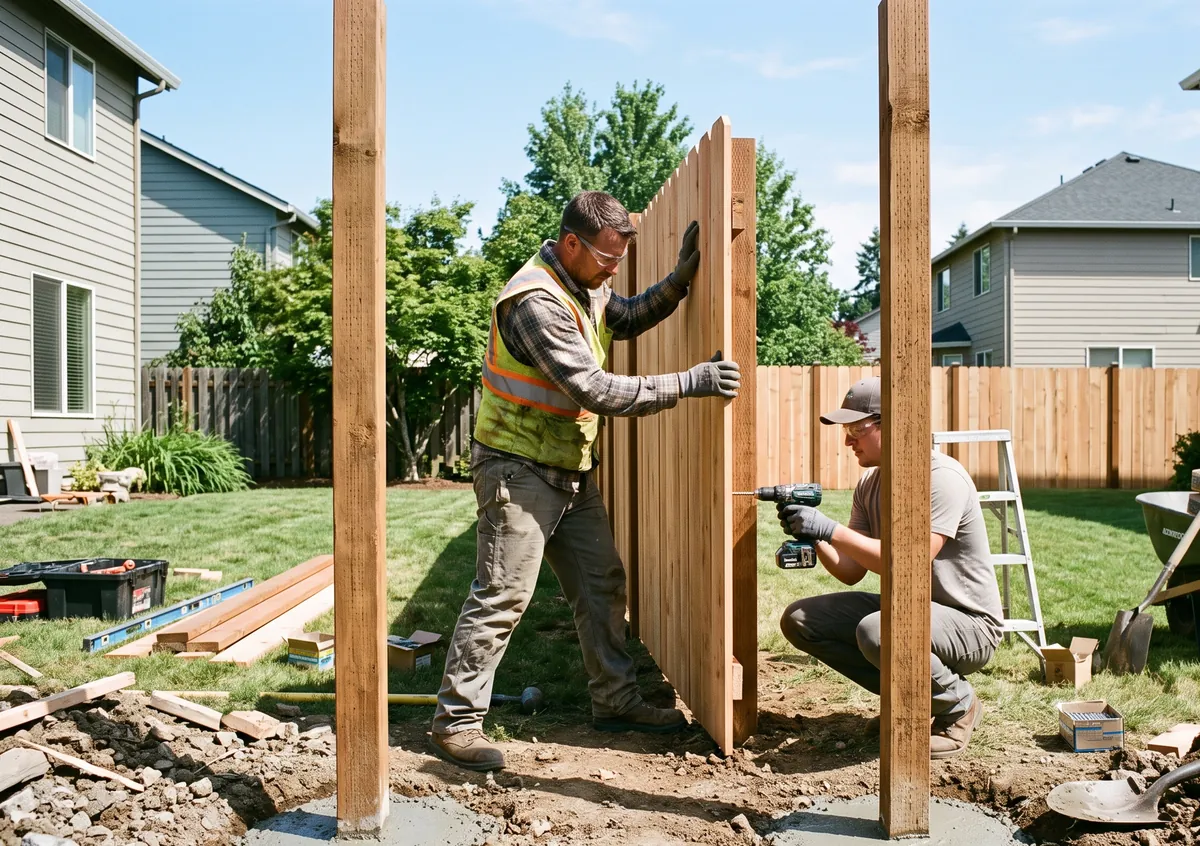
Fence installation cost: in 2026 you should budget roughly $20 to $85 per linear foot installed, depending almost entirely on the material, the height, and what's under your dirt. Most of my customers land somewhere between $3,500 and $9,000 for a typical residential yard.
I've been building fence for fifteen years. I've quoted thousands of jobs, and I've watched homeowners get sticker shock and then, six months later, watched a few of them get a worse kind of shock when their bargain fence started leaning. So let me walk you through what the numbers actually mean, where the money really goes, and how a pro like me builds a bid. By the end you'll be able to read a quote and know whether you're looking at a fair price or a setup for a callback.
If you're still deciding what material to put in the ground, read my breakdown of wood vs vinyl vs aluminum first, because that decision drives most of the cost you're about to see.
Cost Per Linear Foot By Material
Here's the honest range I see in 2026, installed, including labor and standard materials. These are real installed numbers, not the cost of a pile of pickets at the lumber yard.
| Material | Installed cost per linear foot | Typical lifespan | Notes |
|---|---|---|---|
| Chain-link (4 ft, residential) | $15 to $40 | 15 to 25 years | Galvanized cheaper, vinyl-coated more |
| Wood picket (3 to 4 ft) | $20 to $40 | 12 to 20 years | Cedar costs more than pressure-treated pine |
| Wood privacy (6 ft) | $30 to $60 | 12 to 20 years | More lumber per foot, more labor |
| Vinyl (6 ft privacy) | $40 to $70 | 25 to 30 years | Quality of the panel matters enormously |
| Aluminum (4 to 5 ft) | $35 to $65 | 30 plus years | Decorative, not a privacy fence |
| Composite | $55 to $90 | 25 to 30 years | Priciest, looks like wood without the rot |
Those are wide ranges on purpose. A 4-foot chain-link on flat ground in a market with cheap labor can come in near the bottom. A 6-foot composite fence stepping down a slope in a high-cost metro can blow past the top. The material is just the starting point.
What Drives The Number Up Or Down
The per-foot table is the conversation starter. Here's what actually moves the final price on your driveway.
Height
This one trips people up. Going from a 4-foot fence to a 6-foot fence is not a 50 percent jump in material. It's more, because a taller fence needs longer posts, deeper holes, and often a third rail for stiffness. A 6-foot privacy fence uses meaningfully more lumber per foot than a 4-foot picket, and the posts go deeper to hold the extra wind load. Wind load is real. A solid 6-foot privacy fence is a sail, and a sail needs a serious anchor.
Terrain And Slope
Flat, open backyard with soft soil: that's my dream job and your best price. Now start adding problems. A slope means I either step the fence (each section drops a notch, which adds cut labor) or rack it (the panels follow the grade, which only works with certain materials). Rocky soil or heavy clay means slower digging, sometimes a rented auger or a rock bar, and occasionally a hand-dug hole because the auger just spins. Tree roots, old concrete footings, buried debris: every one of those is time, and time is the labor line on your bid.
Post Setting
This is where cheap quotes cut corners, and it's the part you can't see once the fence is up. I set posts at roughly one-third of the total post length in the ground, with a minimum of 24 inches, and deeper than the local frost line where freezing matters. For a 6-foot fence that means a 9-foot post with about 3 feet buried in concrete. A contractor who sets a 6-foot fence in 18 inches of dirt with a shovelful of dry concrete is saving himself money today and selling you a leaning fence in three winters. Post depth and concrete are the spine of the whole job. When you compare quotes, ask every bidder exactly how deep they set posts and whether they bag-mix or pour. The cheap guy usually gets quiet.
Gates
Gates are not free fence. A single walk gate adds maybe $150 to $400 installed depending on material and hardware. A double drive gate, the kind you back a truck through, can run $600 to $1,500 or more because it needs heavier posts, a drop rod, and hardware that won't sag. Every gate is a hole in your fence line that has to swing true for years, so it gets reinforced posts and better hinges. Skimp on gate hardware and you'll be shimming it every spring.
Old Fence Removal
Tearing out and hauling away your old fence is its own line item, usually $3 to $10 per linear foot, more if the old posts were set in concrete and have to be dug out. Pulling a 50-foot run of concrete-set posts is genuinely hard labor, and dump fees aren't free. Some homeowners save real money by demoing the old fence themselves before I show up. If you've got a weekend and a strong back, that's a legitimate way to shave the bill.
How Pros Actually Build A Bid
When I quote a fence, I'm not pulling a per-foot number out of the air. Here's roughly what's running through my head:
- Measure the run. Total linear feet, then count corners and ends, because those posts cost more and dig slower.
- Count the gates. Each one is added material, added hardware, added labor.
- Read the ground. Slope, soil type, access for my truck and equipment. Can I get a powered auger back there or am I hand-digging?
- Price the posts and concrete. This is the structural backbone and the part I never cut.
- Add removal and haul-off if there's an existing fence.
- Factor permits and locates. I call 811 on every job to get buried utility lines marked before anyone digs, and some towns require a permit and inspection, which is time and a fee.
- Build in margin for the surprise, because there's always one buried surprise.
A good contractor's bid reflects all of that. A suspiciously low bid usually means one or more of those got skipped, and the one that gets skipped most often is post depth. For more on reading a contractor and his paperwork, see my guide on how to hire a fence contractor.
Why Two Quotes For The "Same" Fence Differ By Thousands
Homeowners send me a competitor's quote all the time and ask why mine is higher, or lower, for what looks like the same fence. The answer is almost always one of these hidden variables:
- Post depth and concrete. A bid that sets posts at 18 inches with a half bag of concrete is cheaper than mine setting them at 36 inches with a full bag. Same fence on paper. Different fence in five years.
- Lumber grade. Pressure-treated pine versus cedar is a real spread per foot. A quote that just says "wood" is hiding which one.
- Rail count. Two rails versus three on a 6-foot fence changes the material and the labor, and the two-rail fence sags.
- Hardware quality. Builder-grade gate hinges versus heavy-duty ones is a small line item that decides whether your gate still swings true in year three.
- Cleanup and haul-off. Some bids quietly leave the old fence and the dirt spoils for you to deal with.
So when you compare quotes, you're rarely comparing the same fence. You're comparing different fences that happen to enclose the same yard. Line up the specs and the price gaps usually explain themselves.
Regional And Seasonal Swings
Two more things move your number that have nothing to do with your yard. Labor rates vary a lot by region: the same 150-foot privacy fence costs more in a high-cost metro than in a rural market, sometimes by a third or more, purely on labor. And timing matters. Spring and early summer are peak fence season, which means busy crews and firmer prices. Late fall and winter, where the ground isn't frozen, can mean a hungrier contractor and a better deal, though frozen ground in cold climates shuts digging down entirely. If your job isn't urgent, getting quotes in the off-season can genuinely save money.
A Few Tools That Save You Money
If you're doing any part of this yourself, a couple of cheap items pay for themselves. A post hole digger or hand auger lets you dig your own holes or tear out old posts before the crew arrives. And a string line and line level helps you mark your run accurately so your measurements to the contractor are real, not eyeballed. For the full kit, see my best fence building tools for 2026.
Frequently Asked Questions
How much does fence installation cost per foot in 2026?
Budget roughly $20 to $85 per linear foot installed, depending on material, height, and what's under your dirt. Chain-link runs $15 to $40, wood lands $20 to $60 depending on height and grade, vinyl runs $40 to $70, aluminum $35 to $65, and composite is the priciest at $55 to $90. Most residential yards land between $3,500 and $9,000 total.
Why is a 6-foot fence so much more than a 4-foot one?
Because it isn't a simple 50 percent jump in material. A taller fence needs longer posts, deeper holes, and often a third rail for stiffness, so it uses meaningfully more lumber per foot and more labor. A 6-foot privacy fence is also a sail that catches wind, so the posts go deeper to anchor against that load. Height drives up both the material and the digging.
Do gates add a lot to the cost?
Yes, gates are not free fence. A single walk gate adds roughly $150 to $400 installed depending on material and hardware. A double drive gate you back a truck through can run $600 to $1,500 or more, because it needs heavier posts, a drop rod, and hardware that won't sag. Every gate is a reinforced hole in your fence line, so it costs more per foot than the straight run around it.
Does removing the old fence cost extra?
It's a separate line item, usually $3 to $10 per linear foot, and more if the old posts were set in concrete and have to be dug out. Pulling a 50-foot run of concrete-set posts is genuinely hard labor, and dump fees aren't free. If you've got a weekend and a strong back, demoing the old fence yourself before the crew shows up is a legitimate way to shave the bill.
Why are two quotes for the same fence thousands of dollars apart?
Because you're rarely comparing the same fence. The hidden variables are post depth and concrete, lumber grade (cedar versus pine), rail count (three versus two), and gate hardware. A bid that sets posts at 18 inches with a half bag of concrete is cheaper on paper than mine setting them at 36 inches with a full bag, but it's a different, weaker fence in five years. Line up the specs and the price gaps usually explain themselves.
Can I save money by installing a fence myself?
Sometimes. A short chain-link or picket run on flat ground is a realistic DIY job, and labor is often half the bid, so the savings are real. But a 6-foot privacy fence stepping down a slope, with gates and concrete-set posts, is where DIY mistakes get expensive fast. A racked panel that's an inch out of level looks wrong forever, and a shallow post leans by year three.
Does the time of year affect fence cost?
It can. Spring and early summer are peak fence season, which means busy crews and firmer prices. Late fall and winter, where the ground isn't frozen, often mean a hungrier contractor and a better deal. If your job isn't urgent, getting quotes in the off-season can genuinely save money, though frozen ground in cold climates shuts digging down entirely.
DIY Versus Hiring This One Out
I'll be blunt, because that's the only way I know how to talk about money. A short chain-link or picket run on flat ground is a realistic DIY project for a handy homeowner, and you'll save most of the labor cost, which is often half the bid. A 6-foot privacy fence stepping down a slope, with gates and concrete-set posts, is a job where DIY mistakes get expensive fast. A racked panel that's an inch out of level over 8 feet looks wrong forever. A post set too shallow leans by year three.
My honest take: if your fence is straight, short, and on flat ground, get quotes but seriously consider doing it yourself. If it's tall, long, on a slope, or it's marking a property line you care about, pay a pro who'll show you his post-depth spec in writing. The cheapest quote is rarely the cheapest fence once you count the callbacks. Spend your money on depth and concrete, because that's the part that's still standing in twenty years when the bargain fence next door is already gone.