Wood vs Vinyl vs Aluminum Fence: Which One Actually Lasts
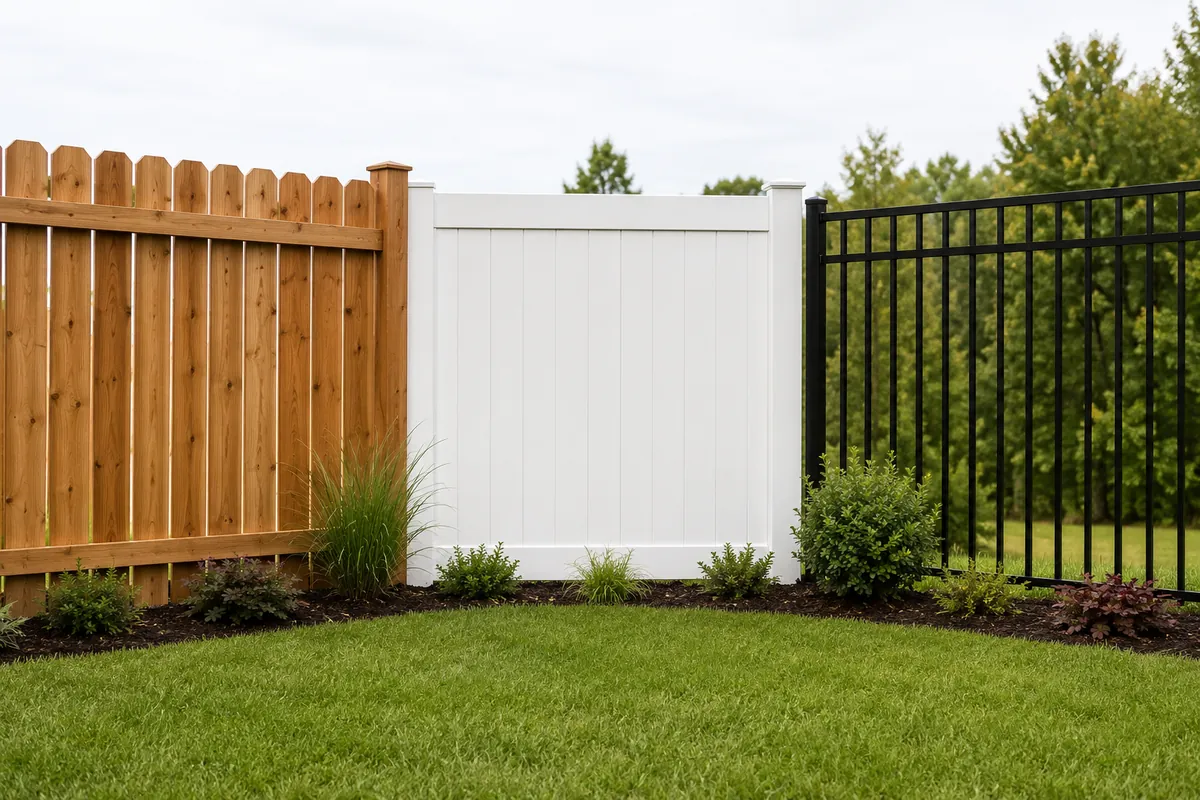
Wood vs vinyl fence: wood is cheaper up front, easy to repair, and needs ongoing maintenance, while vinyl costs more to start, needs almost no upkeep, and lasts longer if you buy a quality panel. Aluminum is the third option and wins when you want a clean look that survives weather but don't need privacy.
I've built all three for fifteen years, and I've also been called out to fix all three. So I'm not selling you on one material. Each one is the right answer in some yard and the wrong answer in another. What I want to do here is give you the honest tradeoffs, including why the cheap version of each one fails, so you spend your money once instead of twice.
If you want the dollar figures behind this comparison, my fence installation cost guide breaks down per-foot pricing for every material below.
The Quick Comparison
Here's the whole argument in one table. The rest of the article explains the nuance, because every one of these cells has an asterisk.
| Factor | Wood | Vinyl | Aluminum |
|---|---|---|---|
| Up-front cost | Lowest to medium | Medium to high | Medium to high |
| Lifespan | 12 to 20 years | 25 to 30 years | 30 plus years |
| Maintenance | High (stain/seal) | Very low | Very low |
| Privacy | Excellent | Excellent | Poor (it's see-through) |
| Repairability | Easy and cheap | Moderate, panel-based | Moderate |
| Best climate | Dry to moderate | Most, but cold is hard on cheap vinyl | All, great near salt air |
| Look | Natural, warm | Clean, uniform | Sharp, decorative |
Cost
Wood usually wins on the sticker price, especially pressure-treated pine. Cedar wood costs more but resists rot better and looks far nicer. Vinyl and aluminum both cost more up front, often noticeably more for a privacy run. But up-front cost is a trap if you stop there. A wood fence that needs staining every two or three years has a maintenance bill stretching out for its whole life. A vinyl fence you pressure-wash once a year has almost none. Over twenty years the gap narrows, and sometimes vinyl actually comes out cheaper once you count the stain, the brushes, and the weekends.
Lifespan And Why The Cheap Versions Fail
This is the section I most want you to read, because it's where money gets wasted.
Cheap wood rots from the ground up. The pickets are rarely the problem. It's the posts. A wood post set too shallow, set without concrete, or set in a hole that holds water rots right at the soil line, and once the post goes, the whole section leans. I've pulled fences where the pickets were fine and every post snapped off at ground level like a carrot. Cedar lasts longer than pine, and a post set deep in concrete above good drainage gravel lasts longer than either. The wood you see is not what fails. The wood you buried is.
Cheap vinyl warps and cracks. Vinyl is sold by the foot, and the cheap stuff is thin-walled, has little or no internal reinforcement, and uses low-grade UV stabilizers. In hot sun the thin panels bow. In hard cold they get brittle and a thrown baseball or a stray soccer ball cracks them. Quality vinyl has thicker walls, aluminum or steel inserts in the rails and gate posts, and proper UV protection, and it holds up for decades. When someone tells me "vinyl fences turn yellow and warp," they bought the bargain panel. The good stuff doesn't do that.
Aluminum's weak point is the install, not the metal. The metal itself, with a good powder coat, basically shrugs off rain, sun, and salt air. What fails is a sloppy install: posts set shallow so a gate sags, or panels racked wrong on a slope so the pickets look drunk. Buy decent aluminum, set the posts right, and the fence outlives most of the others.
Maintenance
Wood is the high-maintenance partner. To get the full lifespan you stain or seal it every two to three years, more in brutal sun. Skip that and a $5,000 fence grays out, cups, and splits years early. Some folks love the silver-gray weathered look and let it ride, which is fine, but you're trading appearance and some lifespan for the saved weekends.
Vinyl and aluminum are both basically wash-and-walk-away. Hose them off, hit a green spot with soap and a brush, done. No stain, no seal, no rust. For people who don't want a recurring chore, that's the whole pitch, and it's a fair one.
Privacy
If you want to block the view, you're choosing between wood and vinyl. Both come in solid privacy styles that give you a real wall. Aluminum does not do privacy. It's a picket-style metal fence, decorative and secure, but you can see right through it. People sometimes call me wanting an aluminum privacy fence and I have to break the news: that's not a thing aluminum does. For a pool enclosure or a front yard accent, aluminum is gorgeous. For blocking your neighbor's view into your patio, it's the wrong tool.
Repairability
Wood is the easiest and cheapest to fix, and that matters more than people think. A car backs into a wood fence, I replace a couple of pickets and maybe a rail with lumber from any yard, and you'd never know. Vinyl repairs are panel-based: you often swap a whole section, and matching an older, sun-faded panel can be tricky. Aluminum is similar, section-based, and matching the powder-coat color years later isn't always perfect. So if your fence lives somewhere it's likely to take a hit, like along a driveway or a kid's basketball hoop, wood's easy repairs are a quiet advantage.
Look And Curb Appeal
This is subjective, so take it as one builder's opinion. Wood has a warmth nothing else matches. A fresh cedar privacy fence is genuinely beautiful, and a weathered gray one has its own rustic charm if that's your taste. The tradeoff is that wood ages visibly, and not always evenly: a few cupped or split pickets stand out. Vinyl reads clean and uniform, the same crisp white or tan for decades, which some people love and others find a little sterile. Aluminum looks sharp and architectural, the wrought-iron look without the rust, and it tends to make a property feel more finished and upscale. There's no wrong answer here, just match the material to the house. A vinyl ranch fence on a rustic cabin looks off, and a weathered wood fence around a modern build can clash too.
Resale And The Neighbor Factor
A fence affects how your property shows, and not always the way you'd guess. A clean, well-maintained fence of any of these three materials helps curb appeal. A sagging, graying, half-rotted wood fence hurts it, which is the maintenance bill coming due in a different form. If you're planning to sell in a few years, vinyl or aluminum's stay-clean nature is a quiet advantage because the fence still looks new when the photos get taken. If you're staying put for decades and enjoy yard work, wood's lower entry cost and easy repairs make more sense. There's also the shared-fence reality: if you're splitting a line fence with a neighbor, the low-maintenance materials avoid future arguments about whose turn it is to stain.
Climate
- Wood does best in dry to moderate climates. Constant wet and humidity accelerate rot, especially at the posts.
- Vinyl handles most climates, but cheap vinyl struggles in hard cold (brittle) and intense sun (warping). Quality vinyl handles both.
- Aluminum is the all-climate champ and the clear pick near salt air, where it won't rust like steel and won't rot like wood.
When Each One Wins
Choose wood when you want privacy on a budget, you don't mind the upkeep, and you value easy repairs. A cedar privacy fence, posts set deep in concrete, is a beautiful and honest fence. Just commit to the stain schedule. If you're handy, my how to build a wood fence guide walks the whole job.
Choose vinyl when you want privacy with no maintenance and you're willing to pay more up front, and crucially, when you buy a quality reinforced panel and not the bargain one. This is the right call for a lot of busy homeowners who never want to touch the fence again.
Choose aluminum when you want a clean, secure, decorative fence that lasts essentially forever and you don't need privacy. Pool codes, front yards, and properties near the coast are aluminum's home turf.
A couple of items help no matter which you pick. A pressure washer keeps vinyl and aluminum looking new, and if you go wood, quality fence stain and sealer is the difference between a fence that lasts 20 years and one that lasts 10. For the full toolkit, see my best fence building tools for 2026.
Frequently Asked Questions
Which fence material lasts the longest?
Aluminum lasts longest at 30 plus years, vinyl runs 25 to 30 years, and wood lasts 12 to 20 years depending on the wood and how it's maintained. But lifespan depends as much on the install as the material. Cheap wood rots from the posts up, cheap vinyl warps and cracks, and even aluminum sags if the posts are set shallow. Buy quality and set the posts deep in concrete and any of the three serves a long time.
Is vinyl or wood cheaper over the long run?
Wood usually wins on the sticker price, especially pressure-treated pine, but that's a trap if you stop there. A wood fence needs staining every two or three years, a maintenance bill that stretches across its whole life, while vinyl you just pressure-wash. Over twenty years the gap narrows, and sometimes vinyl comes out cheaper once you count the stain, the brushes, and the weekends.
Can you get a privacy fence in aluminum?
No, and people ask me this all the time. Aluminum is a picket-style metal fence, decorative and secure, but you can see right through it. If you want to block the view, you're choosing between wood and vinyl, both of which come in solid privacy styles. For a pool enclosure or a front-yard accent, aluminum is gorgeous; for blocking a neighbor's view into your patio, it's the wrong tool.
Why does cheap vinyl fence warp and turn yellow?
Because the bargain panel is thin-walled, has little or no internal reinforcement, and uses low-grade UV stabilizers. In hot sun the thin panels bow, and in hard cold they get brittle enough that a stray ball cracks them. Quality vinyl has thicker walls, aluminum or steel inserts in the rails and gate posts, and proper UV protection, and it holds up for decades. When someone says vinyl warps and yellows, they bought the cheap stuff.
Which fence is easiest to repair?
Wood, by a wide margin, and it matters more than people think. If a car backs into a wood fence, I replace a couple of pickets and maybe a rail with lumber from any yard and you'd never know. Vinyl and aluminum repairs are section-based, often a whole panel, and matching an older sun-faded panel or powder-coat color years later isn't always perfect. If your fence is likely to take a hit, wood's easy repairs are a quiet advantage.
What's the best fence material for a pool?
Aluminum is the usual pick for pool enclosures because it survives weather and salt air, looks sharp, and meets the see-through, climb-resistant style that pool codes call for. Pool barriers carry real safety requirements on height, gaps, and self-latching gates, and the CPSC's pool safety guidance spells out what a compliant barrier looks like. Check your local code before buying, because a pool fence has to pass inspection, not just look good.
What's the best fence material for a coastal or salty climate?
Aluminum, hands down. The metal with a good powder coat shrugs off rain, sun, and salt air, where steel would rust and wood would rot, especially at the posts. Vinyl handles most climates too, but cheap vinyl struggles in hard cold and intense sun. Wood does best in dry to moderate climates and suffers anywhere it's constantly wet.
My Honest Take
There's no universal winner here, and anyone who tells you there is wants to sell you one product. Wood is the value and repair champion if you'll maintain it. Vinyl is the set-it-and-forget-it privacy pick if you buy quality. Aluminum is the lifetime decorative-and-secure option where privacy isn't the goal. The expensive mistake isn't picking the wrong material. It's buying the cheap version of the right one, setting the posts shallow, and paying for the same fence twice. Spend on quality panels and deep, concrete-set posts, and any of these three will serve you well for a long time.